Monday, November 21, 2011

Brazil tries to limit Chinese land purchases..


SAO PAULO, (Reuters) - Brazil's government is working on a new rule to further limit the purchase of farm land by foreigners, arguing that the current legislation has been ``insufficient,'' a Brazilian newspaper said Saturday.

The new rule, which could come as a decree, aims to close loopholes that buyers have been using, such as purchasing land through Brazilian companies, Folha de S. Paulo newspaper said.

It could also impose restrictions on investment funds joined by foreigners and force international banks to sell land received as collateral of a defaulted loan within a year.

Brazil is one of the world's largest producers of food and biofuels, and the expansion of its production is seen as crucial toward addressing growing demand for these products, especially from emerging economies such as China.

Brazil's attorney general last year reinterpreted a land law that now limits purchases of rural land by foreigners, or by Brazilian firms that are controlled by foreigners, to areas no larger than 250-5,000 hectares () depending on the region.

The current rule has been fueling uncertainty among agricultural investors and proving a handicap for expansion, according to analysts.

The new legislation should set clearer mechanisms for foreigners to partner with Brazilian companies, especially for agricultural projects, Folha said.

The land legislation is aimed mainly at stopping the advance of China, which has been buying land in other countries through its sovereign fund, the newspaper said.

Official records show 4.3 million hectares of Brazilian land owned by foreigners, but it could be as much as three times bigger than that, the newspaper added.

Reporting by Inae Riveras; Editing by Paul Simao

Friday, November 18, 2011

This Emperor has no clothes....

While Mark Carney is being feted around the world as the wise Central banker who 'saved' the Canadian financial system and has now been chosen to run an international financial regulatory agency...we may want to look a little closely at his achievements.

1) Today we have consumer inflation running at 2.9%. What would a reasonable interest rate be in such a scenario? 3%? 4%? Not 1%. This is theft from savers.

2) Due partly to his Zero interest rate policy and lax lending, Canadians are the most indebted EVER! He may keep saying he wants people to pay down debt and save, but folks are not stupid. Why save, when you LOSE money every year?

3) He proclaims that he is against bail-outs and TBTF (too big to fail). yet our monolithic banks have a built in bail-out in the form of the potentially-ruinous CMHC, who's liabilities could bring the house down.

A recent report stated that while Canadian government debts were not as bad as many other countries, the high level of consumer debt, RE bubble and liability transfer to the Fed government..meant that we were actually at the same over-all debt level as any one of the PIIGS.

There was another Central banker who was lauded as a great genius and has now been shown to be a complete and utter fool, blowing up bubble after bubble..Alan Greenspan.

Lets hope that Carney ( and us ) do not end up in the same mess.
The fundamental problem is that Central bankers surround themselves with bankers, traders, investment bankers and sepculators. They go to their dinners, they come from that back-ground, they leave office and go back to big paying money-moving jobs. So when times are good, they hear the phrase..'Don't do anything' and when it finally hits the fan, 'help us, do something'. The result is the huge imbalances we have now.

The fact that one unelected official can have so much power over a country's fate is the biggest problem.

Thursday, November 17, 2011

Restricting Off-shore ownership picking up steam..

Big piece on CBC BC News about the up-coming civic election and calls for restricting RE ownership by off-shore investors.

An astounding number was revealed. I cannot unfortunately find a link yet (doesn't seem to be up)

74% of recent buyers of Richmond and Vancouver RE are thought to be from Mainland China according to Landcor. Money escaping possible future restrictions.

One listing 'boasted' that it had never been lived in and it's ten year old appliances were never used.

In my building we have absentee owners from Korea, China, Taiwan, Russia, Israel and Dubia. Some units are rented and others are left permanently empty- though there is someone who comes round to pick up the mail and pay bills on the empty ones.

How did we get into such a mess? Lax rules for one. even Australia has restrictions on off-shore ownership, even China does, but we don't. Why not?

The only people to bring it up was Peter Ladner, after he left office, and a solitary councillor who says 'we should look at the matter'.

Too late!

And I doubt one solitary Vancouver councillor can do much. The Australian rules came form their Federal government, not from one city councillor, however well intentioned. Can you imagine our own Premier and Prime Minster making such a pronouncement.

Lets start with punitive taxes on any house not occupied for 6 months a year. We have a city that is unaffordable for those who work here and make it liveable for the parvenues, and keeps the city safe and sound for their investments.

The piece on the CBC ended with a Chinese candidate in Richmond saying how Chinese investors should be directed to investing in businesses instead of RE. Quite right.

Tuesday, November 15, 2011

Funny...

I often visit Garth Turner's blog. He is an ex-MP, Cabinet Minister, Investment writer, investment adviser and speaker who most bear blog readers know well.

He keeps a regular blog going here and sometimes he gets things right and sometimes not, however he has an interesting turn of phrase. There was one such in the latest post which had me laughing and I thought it worth reprinting:

'Since this pathetic blog crawled from the primordial ooze (I should clean the Bunker more often), I’ve argued against our infatuation with the physical. For reasons I have pounded into sand, real estate will disappoint mightily in the years ahead, now completely unsupported by economic fundamentals and held aloft by duct tape, HGTV, fleeting aspirations and delusional mothers-in-law. No match for debt, lost jobs or swampy incomes.'

BTW

That latest post highlights the situation in Whistler (which has a MOI of over a year), which like the Sunshine Coast and the Okanagan and Victoria is not rosy and not the frenzy that is Vancouver.


Tuesday, November 8, 2011

Whowouldathunkit...

THE BCREA comes out with a bearish forecast on home prices..

Vancouver to drop 3.5%.

BC to drop 2.5%

....in 2012.

All from the pen and mouth of our very own Cameron Muir.

and here is what they say about Victoria

' Prices in Victoria will remain below the $504,561 average in 2010, however, slipping to $499,000 this year, then up to $501,000 in 2012.

“The Victoria market is being impacted by slower growth in employment, reduced interprovincial migration flows and continuing weakness in US tourism,” said the report.'


Wednesday, November 2, 2011

VICTORIA....

Big drop in the Average and flat median YOY. Looks the opposite of what is happening in Vancouver, where only the very wealthy are still buying. It seems like in Victoria lower priced housing is still selling:

Total Greater Victoria SFH

October 2011

Average $595,836
6 month Ave $619,828
Median $539,750

October 2010

$641,780
$627,263
$539,500


Tuesday, November 1, 2011

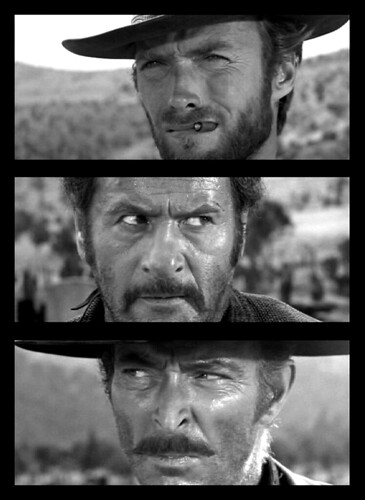
The Good the Bad and the Ugly

Larry has his numbers out and they paint a mixed picture.

The Average prices showed:

Detached and attached moved up and condos lost value. Detached went up about 5% MOM. Just when you think this market has started it's descent up it pops like dracula ready to bite some flesh off unsuspecting buyers.

I said that I expected one of the indices for one of the categories to be flat YOY and it seems like apartments will fit the bill.

The YOY rise in average apartment prices is about 1%. Less than inflation.

Detached is up about 9% YOY with higher inventory and flat sales. What does that mean - it means more expensive houses are being sold. The 1% are buying more than the 99%.

If so the HPI or median may paint a different picture.

So what now?

Well we got a pop in the most expensive segment, detached, with the same sales and higher inventory. I don't think this is a sustainable and I would have to say that detached SHOULD have a big drop in even the average price next month.

We have moved from challenging each other and nit-picking to calling our shots, and if we are wrong, so be it.